World Menstrual Hygiene Day 2026: Empowering Girls Through Education, Awareness, and Support
Menstruation is a natural biological process experienced by millions of women and girls around the world. Despite being a normal part of life, menstruation remains surrounded by stigma, myths, misinformation, and social barriers in many communities. These challenges often prevent young girls from accessing accurate information, maintaining proper menstrual hygiene, and participating fully in educational and social activities.
As the world marks World Menstrual Hygiene Day 2026, there is a renewed opportunity to raise awareness about menstrual health, promote dignity for girls and women, and advocate for improved access to menstrual hygiene resources. Menstrual hygiene is not only a health issue but also a matter of education, gender equality, human rights, and community development.
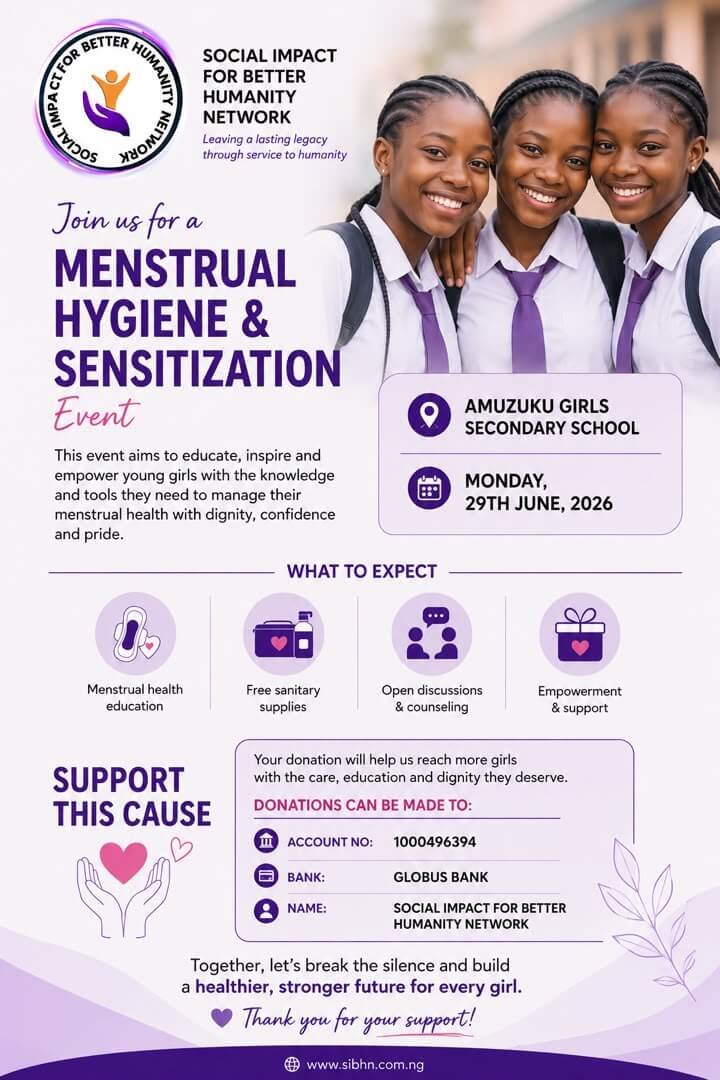
In commemoration of World Menstrual Hygiene Day 2026, Social Impact for Better Humanity Network will conduct a Menstrual Hygiene Education and Sensitization Outreach at Amuzuku Girls Secondary School, Amuzuku, Umuahia, Abia State, on June 29, 2026. The outreach aims to educate, empower, and support young girls by providing essential knowledge and menstrual hygiene materials that will enable them to manage their menstrual cycles with confidence and dignity.
Menstrual Hygiene Education
One of the most important aspects of promoting menstrual health is ensuring that girls receive accurate and comprehensive menstrual hygiene education. Unfortunately, many young girls experience their first menstrual cycle without adequate information about what menstruation is, why it occurs, and how to manage it properly.
Lack of education often leads to fear, confusion, embarrassment, and anxiety. Some girls may believe harmful myths about menstruation, while others may feel isolated because they do not understand the physical and emotional changes taking place in their bodies.
Menstrual hygiene education helps girls understand:
- The biological process of menstruation.
- The importance of personal hygiene during menstruation.
- Proper use and disposal of sanitary products.
- How to manage menstrual discomfort.
- The connection between menstrual health and overall well-being.
- The importance of seeking support when needed.
Through education, girls become more confident and better equipped to make informed decisions about their health. They learn that menstruation is a natural and healthy part of life rather than something to be feared or hidden.
At the outreach event, participants will receive age-appropriate information designed to increase their understanding of menstrual health while promoting positive attitudes toward menstruation.
World Menstrual Hygiene Day 2026
World Menstrual Hygiene Day 2026 serves as a global platform for advocacy, education, and action. Observed annually, the day highlights the importance of menstrual health and the need to eliminate barriers that prevent girls and women from managing their periods safely and comfortably.
Across the world, millions of girls continue to face challenges related to menstrual hygiene management. These challenges include:
- Limited access to sanitary products.
- Inadequate sanitation facilities.
- Lack of clean water.
- Social stigma and discrimination.
- Poor menstrual health education.
- Financial barriers affecting access to hygiene products.
The observance of World Menstrual Hygiene Day encourages governments, organizations, schools, healthcare providers, and communities to work together in addressing these issues.
This year’s outreach by Social Impact for Better Humanity Network aligns with the global movement to ensure that every girl has access to the knowledge, resources, and support necessary for healthy menstrual hygiene management.
The event will contribute to ongoing efforts to promote menstrual equity and ensure that no girl is left behind because of her menstrual cycle.
Menstrual Hygiene Outreach in Abia State
The upcoming outreach at Amuzuku Girls Secondary School represents a significant step toward improving menstrual health awareness among young girls in Abia State.
Schools play a crucial role in shaping the future of young people. By bringing menstrual hygiene education directly into schools, organizations can reach girls during a critical stage of development and provide them with practical information that can positively impact their lives.
The outreach will focus on:
- Menstrual hygiene awareness.
- Health education and sensitization.
- Distribution of menstrual hygiene materials.
- Interactive discussions and question-and-answer sessions.
- Confidence-building activities.
- Encouraging healthy hygiene practices.
Many girls in rural and semi-urban communities continue to face challenges in accessing menstrual hygiene products and accurate health information. This outreach seeks to bridge that gap by ensuring that participants leave with both knowledge and practical resources.
The initiative also aims to create a supportive environment where girls can openly discuss menstrual health issues without fear of judgment or embarrassment.
By investing in menstrual health education, communities can contribute to improved school attendance, better health outcomes, and enhanced self-esteem among young girls.
Girls Empowerment Program Nigeria
Empowering girls goes beyond providing educational opportunities. It also involves equipping them with the knowledge, resources, and confidence necessary to overcome challenges that may hinder their personal growth and development.
Menstrual health is closely linked to girls’ empowerment because poor menstrual hygiene management can negatively affect education, social participation, and mental well-being.
Many girls miss school during their menstrual periods due to inadequate access to sanitary products, lack of privacy, or fear of embarrassment. These disruptions can impact academic performance and limit opportunities for success.
The outreach program contributes to girls’ empowerment by:
- Promoting self-confidence.
- Encouraging positive self-image.
- Supporting educational participation.
- Reducing menstrual stigma.
- Enhancing health awareness.
- Providing access to essential hygiene resources.
When girls are empowered with knowledge and support, they are more likely to remain engaged in education, pursue their goals, and contribute meaningfully to their communities.
Empowering girls is an investment in stronger families, healthier communities, and sustainable national development.
Menstrual Health Awareness Campaign
Creating lasting change requires continuous awareness and community engagement. A successful menstrual health awareness campaign helps challenge harmful misconceptions and promotes a culture of understanding and support.
Many cultural beliefs and social norms continue to perpetuate myths about menstruation. These misconceptions often contribute to discrimination, exclusion, and silence surrounding menstrual health.
Awareness campaigns help address these challenges by:
- Promoting accurate information.
- Encouraging open conversations.
- Reducing stigma and shame.
- Advocating for menstrual equity.
- Supporting policy and community action.
- Encouraging inclusive participation.
The Menstrual Hygiene and Sensitization Outreach at Amuzuku Girls Secondary School forms part of a broader effort to increase awareness and encourage positive attitudes toward menstrual health.
Through community engagement and educational activities, the campaign seeks to ensure that menstruation is recognized as a normal and healthy aspect of life.
Why Your Support Matters
The success of community-based initiatives often depends on the collective efforts of individuals, organizations, and stakeholders who share a commitment to positive social change.
Supporting menstrual hygiene programs can have a direct impact on the lives of young girls by helping to provide:
- Sanitary pads and hygiene materials.
- Educational resources.
- Health awareness sessions.
- Community sensitization activities.
- Sustainable menstrual health interventions.
Every contribution, whether through donations, partnerships, sponsorships, or volunteer support, helps expand the reach and effectiveness of the program.
By supporting this outreach, donors and partners become part of a movement dedicated to improving health outcomes, promoting gender equality, and empowering the next generation of female leaders.
Building Healthier Futures for Girls
Menstrual hygiene management is an essential component of public health, education, and social development. Ensuring that girls have access to information and resources can significantly improve their quality of life and future opportunities.
A girl who understands her menstrual cycle is more likely to feel confident, stay engaged in school, and make informed health decisions. Communities that support menstrual health create environments where girls can thrive and achieve their full potential.
Through education, awareness, and practical support, Social Impact for Better Humanity Network is committed to helping young girls overcome barriers associated with menstruation and embrace their future with confidence.
Conclusion
As we commemorate World Menstrual Hygiene Day 2026, we reaffirm our commitment to creating a world where every girl can manage her menstrual health with dignity, confidence, and adequate support.
The Menstrual Hygiene and Sensitization Outreach at Amuzuku Girls Secondary School, Amuzuku, Umuahia, Abia State, represents an important opportunity to educate, empower, and inspire young girls while promoting healthier communities.
We invite individuals, organizations, businesses, and development partners to join us in this meaningful initiative. Together, we can break the silence surrounding menstruation, challenge harmful stigmas, and ensure that every girl has access to the knowledge and resources she needs to succeed.
By investing in menstrual health today, we are building healthier futures, stronger communities, and a more equitable society for generations to come.